Social media influencers provide relatability, but they cannot replace the clinical depth of professional therapy. Discover why the distinction between digital content and personalized therapeutic care is vital for your mental health and long-term wellbeing.

Let me say this first: I am not anti-internet. I am not dismissing the value of mental health content online. Some of it is genuinely good; it reduces stigma, introduces people to concepts they’d never encounter otherwise, and for many people, a sixty-second video is the first time they’ve ever felt seen.
That matters. I don’t want to minimize it.
But there is a growing trend that concerns me professionally, and I think it’s worth talking about honestly. More and more people are turning to social media influencers, even well-meaning, relatable, seemingly knowledgeable ones, as a primary source of mental health support. And that’s a distinction worth examining carefully.
What influencers can do
To be fair, good mental health content online can do real things. It can name experiences people didn’t have language for. It can reduce shame by showing someone they’re not alone. It can prompt someone to finally book an appointment they’d been putting off for months.
Used well, it’s a bridge. A starting point. An introduction to ideas that can be explored more deeply somewhere else.
The problem isn’t the content existing. The problem is when it becomes the destination.
What influencers cannot do
Here is what no amount of followers, lived experience, or genuinely good intentions can replicate:
A trained therapist knows not just what to say, but what not to say, when to say nothing, and why. Clinical training isn’t about accumulating information. It’s about learning how to be with another person in a way that creates the conditions for real change. That includes understanding how trauma lives in the body, how attachment patterns shape present relationships, how to recognize when someone is in crisis, and how to respond in a way that helps rather than harms.
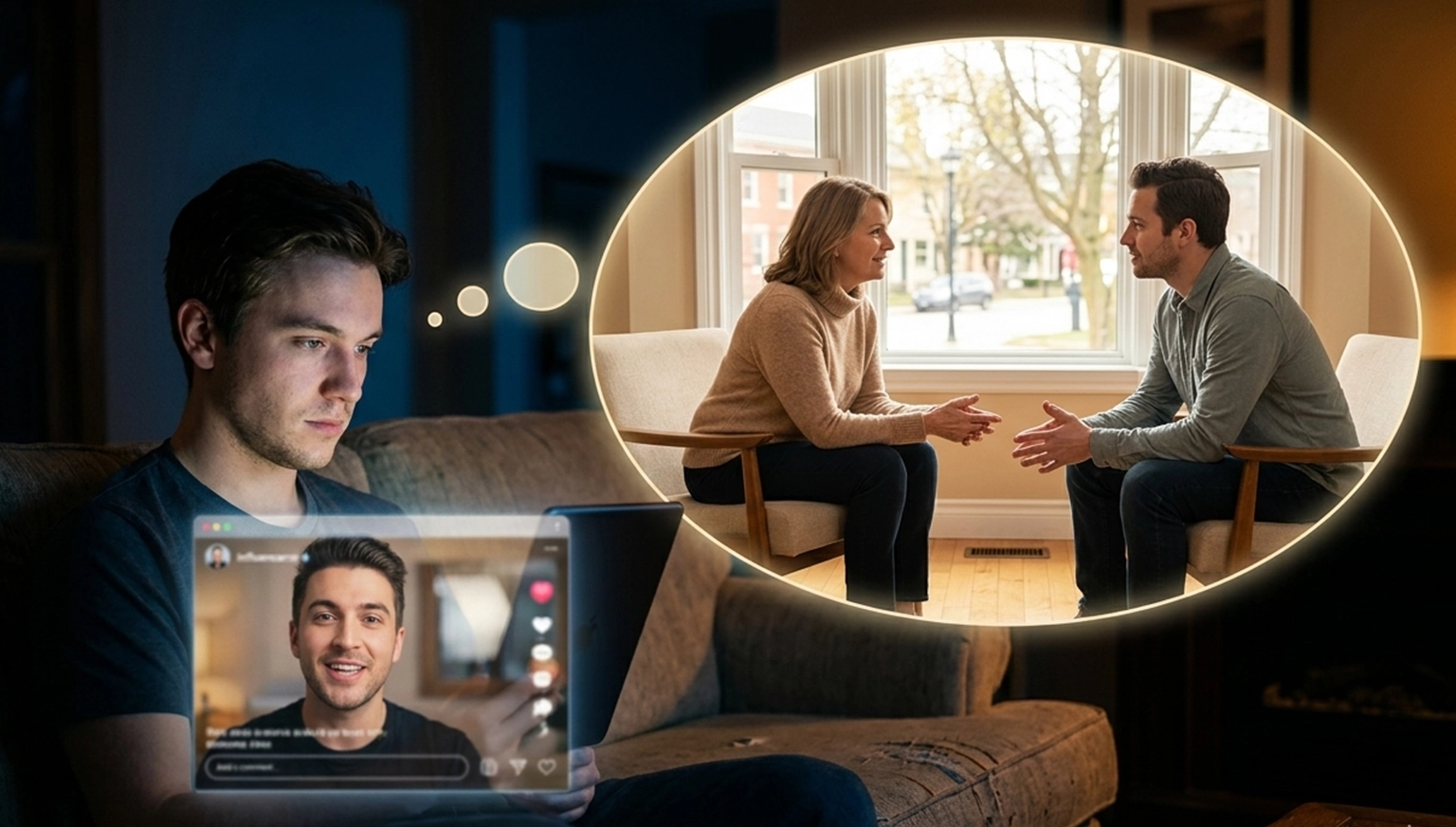
An influencer, no matter how relatable or well-read, is broadcasting. They are speaking to thousands of people at once, with no knowledge of who is on the other side of the screen, what that person has experienced, or what they actually need in that moment.
Therapy is the opposite of that. It is one person, in one room, receiving something specifically tailored to them. That is not a small difference.
The danger of parasocial relationships
There’s a specific dynamic worth naming here. When you follow someone consistently, watching their content, feeling like you know them, finding comfort in their presence, a parasocial relationship develops. It feels like connection. It can feel like support.
But it isn’t reciprocal. The influencer doesn’t know you. They cannot track how you’re doing over time. They cannot notice that something shifted in you three weeks ago and gently bring it up. They cannot hold the full complexity of your story.
Real therapeutic relationships are built on continuity, attunement, and genuine two-way presence. What feels like intimacy online is, at its core, one-directional, and leaning on it too heavily can actually get in the way of seeking the real thing.
Misinformation as a clinical concern
Not all mental health content online is created equal, and some of it is actively harmful. Oversimplified explanations of complex diagnoses. Checklists that lead people to self-diagnose in ways that may not be accurate. Advice that sounds reasonable in a general sense but could be genuinely damaging for someone with a specific history or presentation.
A registered therapist is accountable. There are regulatory bodies, ethical codes, and professional standards that exist specifically to protect the people who come to us for help. An influencer has none of that. Their only accountability is their audience, and audiences, unfortunately, often reward confidence over accuracy.
Distinguishing support from professional care
I want to be clear: I’m not saying only therapists are allowed to talk about mental health. Lived experience is valuable. Peer support is valuable. Feeling less alone because someone online articulated something you’ve been carrying, that’s valuable.
But there is a difference between content that supports your wellbeing and content that replaces professional care. One complements the work. The other delays it.
If you’ve been watching mental health content online and finding it helpful, that’s worth paying attention to. It might be telling you something about what you’re looking for. And what you’re looking for might be available, really available, in a way a screen can’t offer, in an actual therapeutic relationship.
The bottom line
You deserve more than content. You deserve a space that is entirely yours, with someone who knows your name, remembers what you said last week, and is professionally and ethically committed to your wellbeing.
That’s what therapy offers. And no algorithm, however well-intentioned, can replicate it.
Book a Consultation
It’s easy and free!